


A trailer concrete pump for sale is a practical solution for contractors, ready-mix suppliers, and construction companies that need to transport concrete efficiently through pipelines rather than relying on manual handling. Also called a concrete line pump, this equipment is widely used for house foundations, high-rise buildings, bridges, tunnels, roads, dams, and other projects where concrete must travel a long horizontal distance or be pumped vertically to an elevated pouring point.
Choosing the right trailer-mounted concrete pump involves more than comparing the lowest price or the highest theoretical output. The correct model must match your required pumping capacity, maximum concrete pressure, pipeline layout, aggregate size, concrete mix, jobsite power supply, and expected working hours. This guide explains the main specifications and buying factors to consider before selecting a trailer concrete pump for your construction project or concrete pumping business.
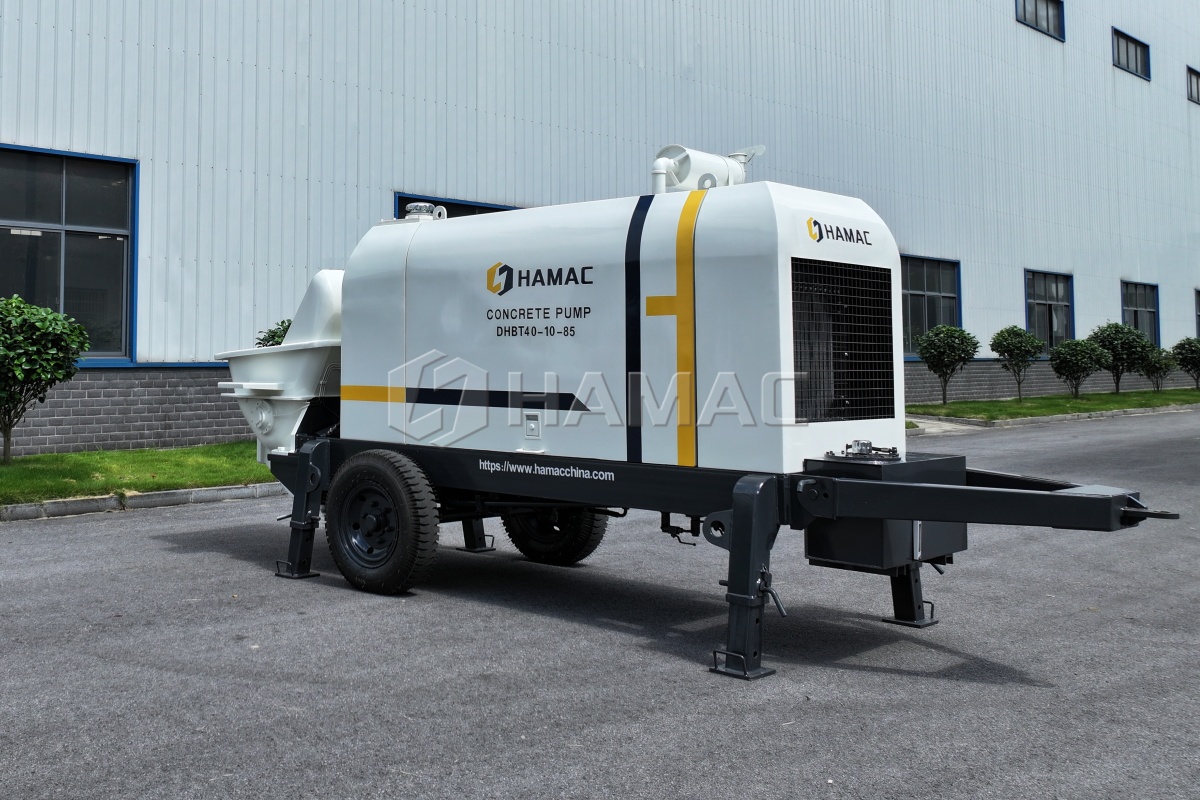
How to Choose Trailer Concrete Pump Output and Pumping Distance
The first step is to calculate how much concrete must be delivered during the busiest part of the project. Trailer concrete pumps are commonly selected by theoretical output, such as 30 m³/h, 40 m³/h, 50 m³/h, 60 m³/h, or 80 m³/h. A house-building contractor may only need a compact concrete line pump for intermittent foundation and slab pours, while a large commercial building, bridge, tunnel, or ready-mix pumping service may need higher output and stronger pumping pressure to maintain a continuous pour.
It is important to distinguish between concrete pump output and concrete pump pressure. Output indicates the volume of concrete the pump can theoretically deliver per hour. Pressure provides the force needed to overcome pipeline resistance, vertical height, long horizontal distance, bends, reducers, and difficult concrete mixes. A project with a long pipeline or a high-rise structure may need a higher-pressure pump even when the required concrete volume per hour is not extremely high.
| Typical Pump Output | Suitable Project Scale | Common Applications | Key Selection Focus |
|---|---|---|---|
| 30–40 m³/h | Small to medium | House construction, small foundations, rural buildings, local repair work | Compact size, practical pipeline distance, diesel or electric power availability |
| 50–60 m³/h | Medium | Commercial buildings, bridges, medium concrete supply, repeated pours | Balanced output, pressure, pipeline configuration, and concrete mixer truck supply |
| 60–80 m³/h | Medium to large | High-rise work, infrastructure, tunnel sections, larger foundations | Higher pressure, reliable hydraulic system, wear parts, and continuous operation capability |
| 80 m³/h and above | Large and demanding | Major infrastructure, large commercial supply, long-distance concrete pumping | System matching with batching plant, transit mixer fleet, pipeline layout, and placing equipment |
Before requesting a quotation, prepare the estimated horizontal pumping distance, vertical pumping height, number of pipeline bends, pipe diameter, expected concrete slump, maximum aggregate size, and concrete grade. These details allow the supplier to recommend a suitable pumping system instead of only quoting a standard model. If you need to pump concrete to upper floors, the pipeline should be planned together with the building schedule, anchoring method, and cleaning arrangement.
Example: Selecting a diesel trailer pump for a remote building project
A contractor is constructing several low-rise buildings in an area without reliable grid power or nearby ready-mix supply. Concrete is produced on site with a mixer or delivered from a small local plant, then pumped through a pipeline to foundations, columns, and roof slabs. A diesel trailer concrete pump with suitable output and pressure can provide independent operation, reduce manual wheelbarrow work, and support continuous pours. The final model should be chosen after checking pipeline length, slope, aggregate size, and expected daily concrete volume.
Diesel or Electric Trailer Concrete Pump: Which Is Better?
One of the most important decisions is whether to select a diesel concrete pump or an electric concrete line pump. Both can be effective, but the best choice depends on local electricity availability, jobsite mobility, operating hours, environmental requirements, and fuel cost. Diesel-powered trailer pumps are popular for rural areas, road projects, remote construction sites, and locations where electricity is unstable. Electric concrete pumps can be a suitable choice for fixed urban job sites with reliable three-phase power and requirements for lower operating noise or lower local emissions.
| Factor | Diesel Trailer Concrete Pump | Electric Trailer Concrete Pump |
|---|---|---|
| Best working environment | Remote sites, rural areas, roads, bridges, and locations without stable grid power | Urban sites, factories, fixed projects, and locations with reliable three-phase electricity |
| Mobility | High independence from power cables and site electrical infrastructure | Requires compatible power connection and cable planning |
| Operating focus | Fuel supply, engine servicing, and diesel operating cost | Power supply stability, voltage, electrical protection, and cable safety |
| Noise and emissions | Higher than electric operation; assess local site requirements | Generally suitable where lower noise and local emissions are preferred |
| Typical buying priority | Flexibility and independent field operation | Fixed-site efficiency with dependable electrical infrastructure |
Do not make this decision only from the purchase price. A diesel pump can prevent delays on a site with unstable power, while an electric pump can be economical for long-term work where reliable electricity is already available. Ask the supplier to confirm the electric motor specification, required voltage and frequency, or diesel engine configuration according to your destination market and actual site conditions.
Other Buying Factors: Concrete Mix, Pipeline, Maintenance, and Complete Solution
A concrete pump performs best when the concrete mix and pipeline are designed for pumping. The mix should have sufficient mortar content and suitable workability to move through the line smoothly. Oversized aggregate, poor grading, low slump, insufficient sand ratio, or inconsistent material quality can increase the risk of blockages. Before ordering a trailer pump, confirm the maximum aggregate size it can handle and discuss your normal concrete mix design with the supplier.
- Pipeline diameter and layout: Steel pipes, rubber hoses, bends, reducers, clamps, and end hoses should be selected as a complete system. Longer pipelines and more bends create more resistance, so pipeline design directly affects the required pumping pressure and real output.
- Hydraulic system and valve type: The pumping system, hydraulic components, S-valve or distribution valve, pumping cylinders, and hopper design affect pumping stability and service life. Ask about component configuration, lubrication, cooling, and access to normal wear parts.
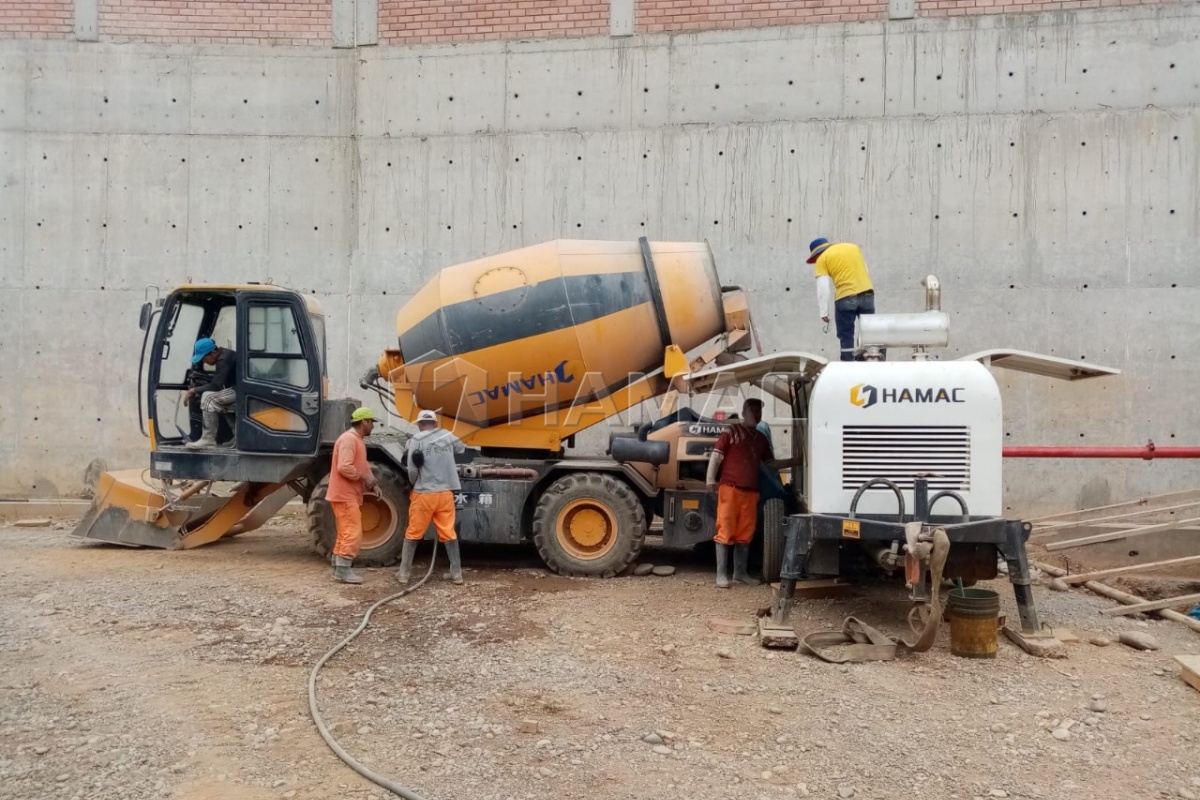
- Concrete supply coordination: The pump should be matched with a concrete batching plant, on-site mixer, or concrete mixer truck supply that can maintain the required pouring speed. A pump cannot achieve efficient output if concrete delivery is irregular.
- Cleaning and blockage prevention: Plan how the pipeline will be primed before pumping and cleaned after each pour. Proper lubrication, correct mix design, stable feeding, and timely cleaning help reduce blockage risk and extend the life of pipes and wear parts.
- Service and spare parts: Concrete pumps include wear components such as cutting rings, wear plates, delivery cylinders, seals, pipeline parts, and clamps. Confirm recommended spare parts, manuals, remote technical support, and service response before buying.
- Complete pouring solution: For higher structures or wide pouring areas, a trailer pump can be combined with a concrete placing boom to improve coverage and reduce manual pipeline movement. The right solution may include the pump, pipeline, accessories, and placing equipment together.
For contractors producing concrete directly at the project site, another option is a trailer concrete mixer pump, which combines mixing and pumping functions for small and medium projects. For larger fixed production operations, pairing the pump with a properly configured batching plant and sufficient transit mixer fleet creates a more stable concrete supply chain. The best equipment choice depends on whether your main challenge is concrete production, concrete transportation, pumping distance, or labor efficiency at the pouring point.