


Choosing between a concrete mixer pump and a trailer concrete pump depends mainly on how your project will obtain concrete before pumping begins. A concrete mixer pump combines concrete mixing and pumping in one machine, making it useful for rural construction, house building, road work, and remote jobsites without a dependable ready-mix concrete supply. A trailer concrete pump, also called a concrete line pump, pumps ready-mixed concrete from a batching plant, transit mixer truck, or separate concrete mixer. It is often the stronger option for continuous, high-volume, long-distance, or high-rise concrete pumping.
For contractors comparing a concrete mixer pump for sale with a trailer concrete pump for sale, the best choice is not simply the machine with the lower initial price. Consider daily concrete demand, pumping distance, vertical height, material supply, jobsite access, diesel or electric power availability, labor organization, and future business plans. HAMAC is a China-based manufacturer and supplier of concrete pumping equipment for overseas construction, ready-mix, infrastructure, and remote project applications.
What Is the Difference Between a Concrete Mixer Pump and a Trailer Concrete Pump?
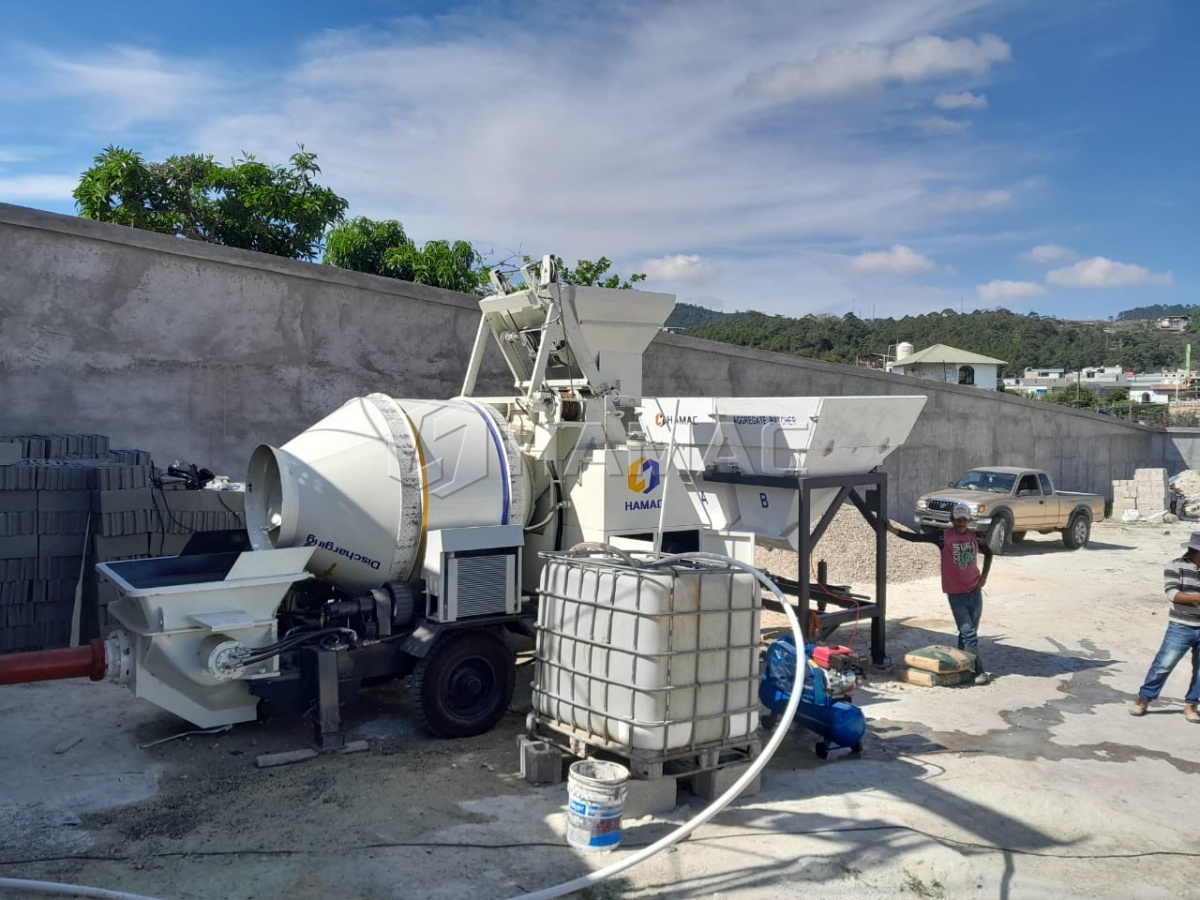
A concrete mixer pump integrates a concrete mixer and a pumping unit into a single machine. Aggregate, sand, cement, water, and other materials can be prepared near the equipment, mixed on site, and then pumped through pipelines to the pouring location. This integrated design can reduce the need for a separate mixer and make concrete production more independent when a ready-mix plant or a transit mixer truck is unavailable.
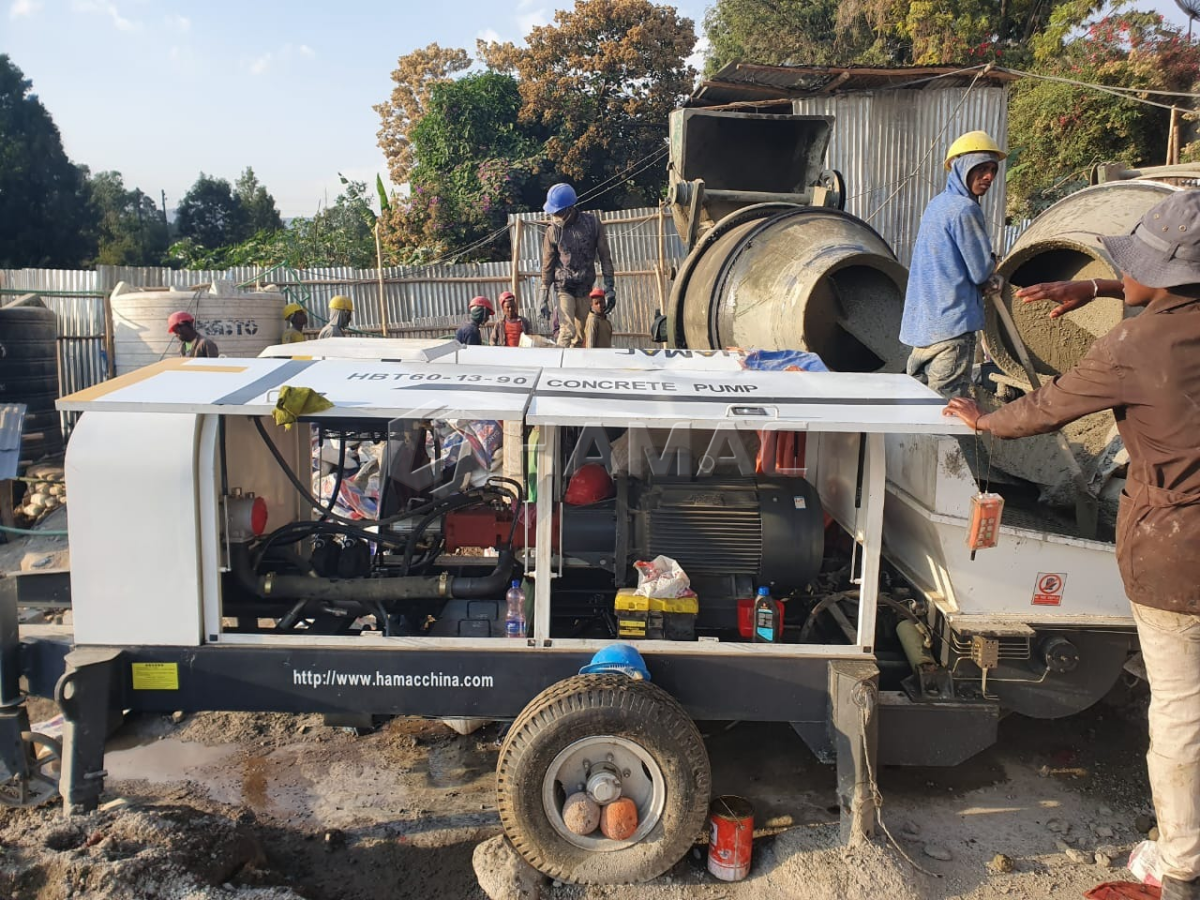
A trailer concrete pump is primarily a pumping machine. It receives already mixed concrete from a ready-mix truck, a fixed or mobile concrete batching plant, or a separate mixer, then transfers the concrete through steel pipes, bends, and end hoses. Since it does not include the mixing function, it is suitable for projects that already have a stable concrete supply and need the pump to focus on consistent delivery, higher output, or longer pumping distance.
| Comparison Item | Concrete Mixer Pump | Trailer Concrete Pump |
|---|---|---|
| Main Function | Mixes concrete and pumps it through pipelines | Pumps ready-mixed concrete through pipelines |
| Concrete Source | Raw materials prepared at the jobsite and mixed by the machine | Ready-mix truck, concrete batching plant, or separate concrete mixer |
| Best Project Type | House construction, rural roads, drainage works, small bridges, remote sites | High-rise buildings, large foundations, bridges, tunnels, ready-mix pumping services |
| Key Advantage | On-site concrete production and pumping in one compact solution | Flexible output and pressure options for continuous concrete delivery |
| Typical Long-Tail Keyword | diesel concrete mixer pump for rural house construction | trailer concrete pump for high-rise building |
Both machines can use diesel or electric power depending on model and configuration. A diesel concrete mixer pump for remote construction sites is often preferred where grid power is unavailable or unstable. An electric concrete line pump for urban construction can be practical at a fixed project with reliable three-phase power, lower noise requirements, and a stable ready-mix concrete supply.
Which Concrete Pump Is Better for Your Project?
A concrete mixer pump is usually the better choice for contractors who need flexibility and independence from ready-mix delivery. It can be especially valuable for rural house construction, low-rise buildings, irrigation channels, drainage systems, small road projects, and remote worksites. If the nearest ready-mix plant is far away, concrete delivery is expensive, or the project requires frequent relocation, a small concrete mixer pump for sale can simplify the jobsite setup by combining mixing and pumping functions.
For example, a contractor building houses and drainage channels in a rural area may stockpile sand, aggregate, and cement close to the project. A concrete mixer pump for house construction can produce the required concrete in batches and pump it to foundations, columns, slabs, or roof work. This solution provides more control over the schedule when ready-mixed concrete trucks cannot reliably reach the site.
A trailer concrete pump is generally more suitable when concrete production is already organized. If a contractor operates a concrete batching plant, receives concrete from ready-mix trucks, or uses a separate mixer continuously, the trailer pump can focus entirely on pipeline delivery. This makes it a suitable solution for commercial buildings, large foundations, bridge construction, tunnels, and other projects requiring a concrete line pump for long-distance pumping.
For a high-rise or large commercial project, the pump must be selected according to output, pressure, vertical height, horizontal distance, pipeline bends, pipe diameter, concrete slump, and maximum aggregate size. A trailer concrete pump for bridge construction or a diesel trailer concrete pump for remote projects should be configured as part of the whole concrete supply system, including batching capacity, transit mixer scheduling, pipeline layout, and pouring sequence.
Project Selection Example
A contractor operates a 60 m³/h batching plant and has enough transit mixers to deliver fresh concrete continuously to a commercial building project. In this situation, a trailer concrete pump is normally more suitable because the concrete supply is already available and the pump can focus on stable, high-efficiency delivery. In contrast, a contractor building scattered rural houses without a nearby ready-mix supplier may gain more value from a concrete mixer pump that mixes and pumps concrete on site.
| Project Condition | Recommended Equipment | Reason |
|---|---|---|
| Remote village house project with no ready-mix supply | Concrete Mixer Pump | Mix and pump concrete directly at the jobsite |
| Small roads, drainage channels, culverts, and rural infrastructure | Concrete Mixer Pump | Suitable for flexible movement and small-to-medium concrete demand |
| Commercial building supplied by ready-mix trucks | Trailer Concrete Pump | Supports continuous pipeline pumping when concrete supply is stable |
| Bridge, tunnel, large foundation, or long-distance pumping work | Trailer Concrete Pump | More suitable for pressure, pipeline planning, and demanding pumping conditions |
| Small contractor serving multiple job sites | Concrete Mixer Pump | Integrated mixing and pumping can reduce equipment coordination |
Compare Capacity, Cost, Setup, and Long-Term Operating Value
When comparing concrete mixer pump price and trailer concrete pump price, assess the full project cost rather than only the machine quotation. A mixer pump includes mixing capability, which may reduce the need to buy or arrange a separate mixer and may reduce dependence on ready-mix truck delivery. A trailer pump can have a lower equipment cost for a similar pumping function, but it requires a dependable source of ready-mixed concrete. The most economical solution depends on your concrete supply chain, labor cost, transport distance, daily output, and project duration.
- Daily concrete demand: Estimate the required concrete volume per day and peak pouring volume per hour. Do not select a pump only from a theoretical output figure.
- Pumping distance and height: Confirm horizontal distance, vertical height, number of bends, pipeline diameter, and end-hose arrangement. Long-distance or high-pressure pumping requires a properly matched trailer pump and pipeline system.
- Concrete mix and aggregate: Discuss your concrete slump, aggregate size, sand ratio, and mix design with the supplier. Pumpable concrete helps prevent blockage and protects pump components.
- Power source: Select diesel power for independent operation in rural, remote, or unstable-power locations. Select electric power where reliable electricity and fixed-site operation make it practical.
- Jobsite space and material handling: A mixer pump requires room for sand, aggregate, cement, water, and loading equipment. A trailer pump requires safe access and a stable supply route for ready-mix trucks or concrete from a batching plant.
- Maintenance and spare parts: Review the hydraulic system, pumping cylinders, distribution valve, wear plates, cutting rings, pipeline components, seals, filters, cleaning procedures, and available technical support.
For projects that need more extensive concrete placing coverage, consider combining the pumping system with a concrete placing boom. For high-rise or high-output urban projects, a truck-mounted concrete boom pump may be a more efficient solution when a ready-mix supply and suitable jobsite access are available. For temporary road, bridge, and remote projects that need local concrete production, a mobile concrete batching plant can also work with a trailer concrete pump.
In summary, select a concrete mixer pump when you need on-site mixing and pumping for small-to-medium, remote, or frequently changing projects. Select a trailer concrete pump when your project already has stable concrete production and needs continuous, high-efficiency pumping over a longer distance or to a higher location. HAMAC can recommend a diesel or electric concrete pumping solution based on your project conditions and overseas delivery requirements.