


For a temporary road or bridge project, a mobile concrete batching plant with quick installation may be the practical choice. For a long-term commercial concrete business, a stationary concrete batching plant with larger aggregate storage, cement silos, and an automatic control system can offer better long-term production stability. This guide explains how to calculate the required output and select a concrete mixing plant configuration that fits your project.
Concrete Batching Plant for Sale: How to Choose the Right Capacity
Source: Hamac Machinery
When you search for a concrete batching plant for sale, capacity is usually the first specification to compare. However, selecting a 25 m³/h, 60 m³/h, 90 m³/h, or 120 m³/h concrete plant should not depend only on the number printed in the product catalog. The right capacity must match your actual concrete demand, peak pouring schedule, site layout, aggregate supply, concrete mixer truck fleet, and future expansion plan. A properly configured plant helps a contractor or ready-mix supplier deliver concrete on time, control production costs, and avoid investing in equipment that is either too small for the project or unnecessarily large for the available workload.
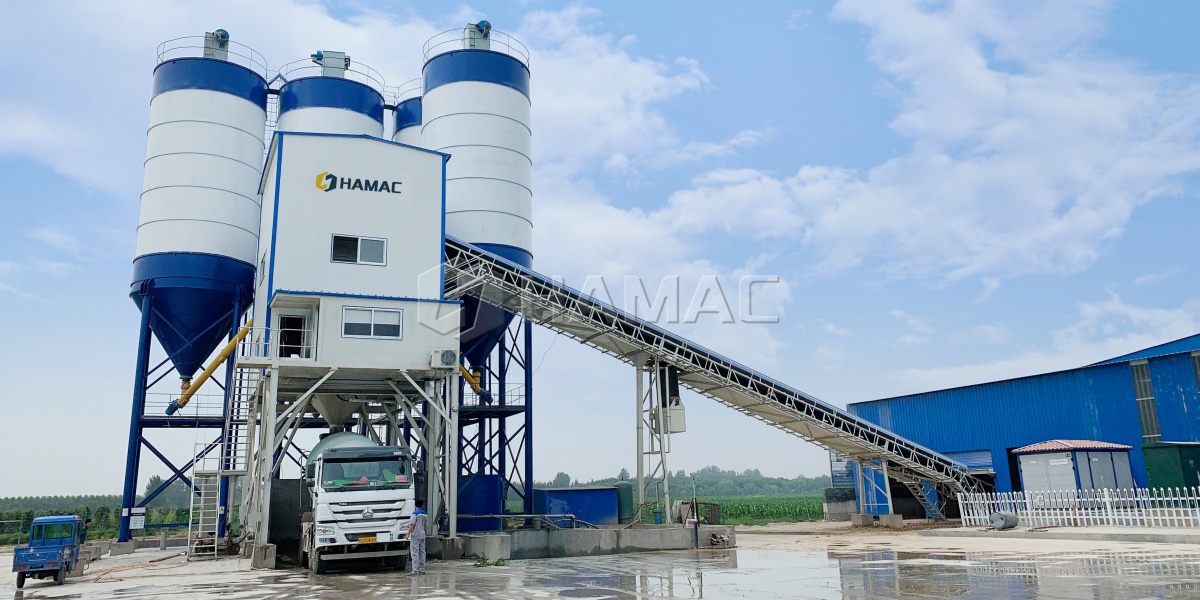
How to Calculate the Right Concrete Batching Plant Capacity
The most reliable starting point is your peak hourly concrete requirement, rather than the average amount of concrete needed over an entire day. For example, a project may consume 300 m³ of concrete during an eight-hour shift, which suggests an average output of only 37.5 m³/h. In reality, the busiest pouring period may require 50 m³/h or more because foundations, slabs, bridge segments, and pump operations are often scheduled in concentrated time windows. If the batching plant cannot keep up during those hours, concrete pumps, transit mixers, and site labor may have to wait.
Practical selection method: Calculate the peak concrete demand per hour, then add an operating margin of approximately 15% to 30%. The margin accounts for aggregate loading time, truck movement, mix changes, normal maintenance, material delivery delays, and other conditions that reduce theoretical output in real operation.
A simple planning formula is: required nominal capacity = peak hourly demand × 1.15 to 1.30. If your peak requirement is 48 m³/h, a 60 m³/h plant is generally a safer choice than a 50 m³/h model. If the project requires continuous concrete pumping, has a strict delivery schedule, or operates in a remote location where material supply may be interrupted, selecting additional capacity is even more important.
| Plant Capacity | Typical Concrete Demand | Common Applications | Recommended Configuration Direction |
|---|---|---|---|
| 25–35 m³/h | Small daily output or intermittent pouring | Rural housing, small precast yards, local road repair, small concrete supply business | Compact stationary plant or mobile concrete batching plant with practical aggregate storage |
| 50–60 m³/h | Medium-volume daily production and regular delivery | Commercial buildings, housing developments, bridges, medium ready-mix operations | Stationary or mobile plant with twin-shaft mixer, cement silo, and automatic weighing system |
| 75–90 m³/h | High peak-hour demand or multiple simultaneous pours | Urban construction, infrastructure projects, expanding commercial concrete supply | Stationary batching plant with larger aggregate bins, multiple silos, and stronger logistics support |
| 120 m³/h | Large and continuous concrete production | Highways, large industrial plants, major commercial projects, large ready-mix stations | High-output stationary concrete mixing plant with substantial stockyard and mixer truck fleet |
| 180 m³/h and above | Very high-volume or multi-project supply | Dams, airports, large infrastructure, major precast production, high-capacity ready-mix business | Large stationary plant or double-line system with advanced control and large material reserves |
The output shown for a concrete mixing plant is usually a theoretical rating under standard conditions. Your actual output can be lower when using complex mix recipes, changing concrete grades frequently, handling wet aggregate, or working with limited truck mixers. Therefore, discuss your concrete mix design, daily output target, peak delivery hours, and local conditions with the supplier before confirming the final plant model.
Example: Choosing a 60 m³/h concrete batching plant
A contractor plans to supply approximately 350 m³ of concrete per day for a housing and commercial building project. Although the average demand over an eight-hour shift is about 44 m³/h, the morning slab-pouring period may require close to 50 m³/h. After adding a reasonable operating margin, a 60 m³/h concrete batching plant becomes a more suitable choice. It provides extra capacity for peak demand while remaining more compact and cost-effective than a larger 90 m³/h plant that may remain underutilized after the main structure is completed.
Key Factors to Consider Before Buying a Concrete Mixing Plant
Capacity is essential, but it is only one part of the purchase decision. A complete ready-mix concrete batching plant must work as a coordinated system. The main mixer, aggregate batching machine, cement silo, screw conveyor, weighing units, control system, loader, and concrete truck fleet should all support the required production level. A high-capacity mixer cannot solve delays caused by insufficient aggregate supply or too few transit mixers.
- Project type and duration: A long-term ready-mix concrete operation usually needs a stationary plant with durable infrastructure and expansion space. Contractors working on roads, bridges, or changing job sites may benefit from a modular or mobile batching plant that can be installed and relocated more quickly.
- Main mixer and concrete quality: A twin-shaft concrete mixer is widely used for commercial concrete and high-output projects because of its efficient mixing performance. Projects producing precast elements, concrete blocks, colored concrete, or special mixes may need a planetary mixer or a tailored mixer configuration.
- Aggregate storage and loading system: Your plant should have enough aggregate bins and stockyard space to prevent production interruption. Consider the number of aggregate sizes required, the capacity of the wheel loader, local material-delivery frequency, and whether the site experiences rainy conditions that affect aggregate moisture.
- Cement, water, and additive supply: Cement silo capacity should match expected daily output and bulk-cement delivery intervals. Water supply, water weighing accuracy, admixture tanks, and dust collection equipment are also important for stable concrete quality and local environmental requirements.
- Transportation and pumping arrangement: A ready-mix plant needs enough concrete mixer trucks to deliver production efficiently. If concrete is pumped directly on site, coordinate the plant output with the capacity of a trailer concrete pump, concrete mixer pump, or boom pump.
- Future expansion: If you plan to add customers, produce concrete in two shifts, or support another project later, select a plant layout that allows additional cement silos, aggregate bins, admixture systems, or a second production line.
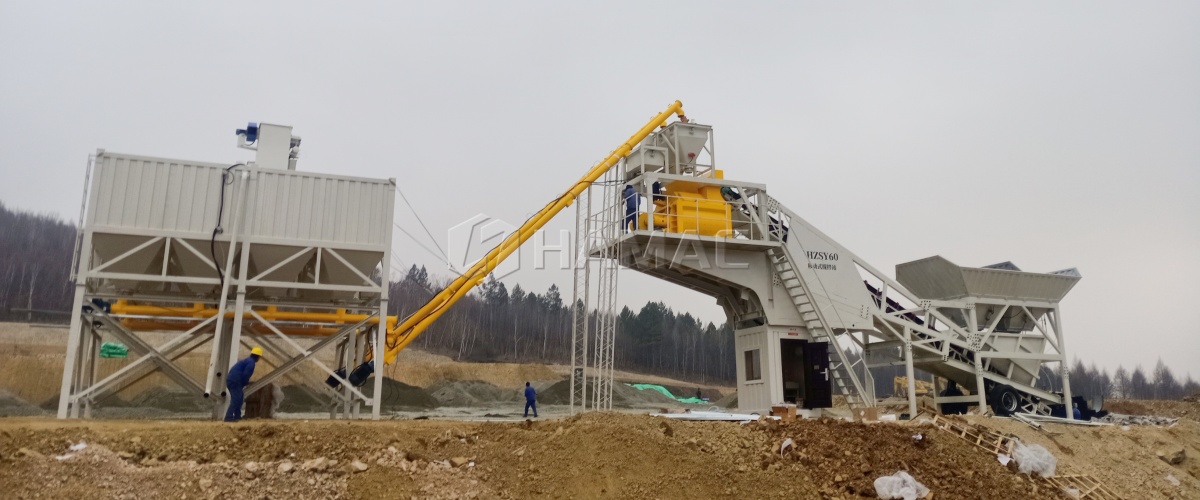
For many overseas contractors, the choice between a mobile and stationary plant is closely related to project duration and logistics. A mobile concrete batching plant can reduce installation work and simplify relocation between projects. A stationary plant is normally more suitable when the site is fixed, concrete production will continue for a long period, and the business requires larger storage capacity, more automation, and room for expansion. You can compare the two solutions in more detail through HAMAC’s concrete equipment product range and request a layout recommendation based on your available land and production target.
Choose a Capacity That Supports Production Today and Growth Tomorrow
The best concrete batching plant is not always the largest model. It is the model that can consistently produce the required concrete volume with a balanced investment, stable material supply, practical installation plan, and sufficient room for business growth. A compact 35 m³/h plant may be the right solution for a local contractor serving small housing projects, while a 60 m³/h or 90 m³/h concrete mixing plant may be more appropriate for a growing ready-mix supplier. For large infrastructure, long-term commercial supply, or high-volume precast operations, 120 m³/h and 180 m³/h systems can provide the production stability needed for demanding schedules.
Before you buy a concrete batching plant, prepare the following information: expected output per hour and per day, project type, site dimensions, local power supply, aggregate types, number of cement silos required, delivery destination, and whether the plant must be moved later. With these details, HAMAC can recommend a suitable concrete batching plant configuration, including the mixer model, aggregate batching system, silo capacity, control system, and optional equipment for your specific application.
Need a tailored recommendation? Send HAMAC your target capacity, concrete application, jobsite location, and expected daily output. A complete solution can be designed around your project requirements instead of a generic standard configuration.
There is no lowest price, only lower price. You get what you pay for. We hope you are looking for the perfect working performance of the equipment, not the low-priced inferior goods. HAMAC only provide our clients with high quality machines. Wish a cooperation with you in the future.