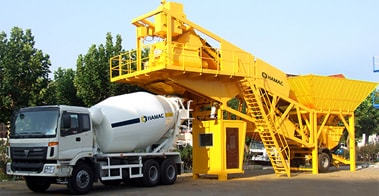



Dry Batch Concrete Batching Plant for Flexible Concrete Production
Source: Hamac Machinery
| Project Type | Dry batch concrete production project |
|---|---|
| Core Solution | HAMAC dry batch concrete batching plant |
| Process | Material storage → weighing → conveying → truck loading → final mixing in transit mixer |
| Customer Priorities | Simple operation, organized batching, flexible site arrangement, and reliable concrete supply |
| Key Configuration | No central concrete mixer; automatic batching and direct discharge to mixer trucks |
From Practical Batching Requirements to a Flexible Dry Batch Solution
The customer needed a concrete batching solution that could organize the storage, weighing, feeding, and discharge of raw materials without adding a central mixing stage. The working environment also called for a practical layout and a straightforward operating process. Since transit mixer trucks were available to complete the final mixing, HAMAC recommended a dry batch concrete batching plant that matched this workflow.
A dry batch concrete batching plant differs from a wet batch plant mainly because it does not include a central concrete mixer. Aggregates, sand, cement, and water are weighed according to the required proportions and discharged directly into the transit mixer. The truck performs the final mixing while traveling to the construction site. HAMAC describes this configuration as a simple and economical solution, particularly suitable when the concrete application area is relatively far from the batching plant.
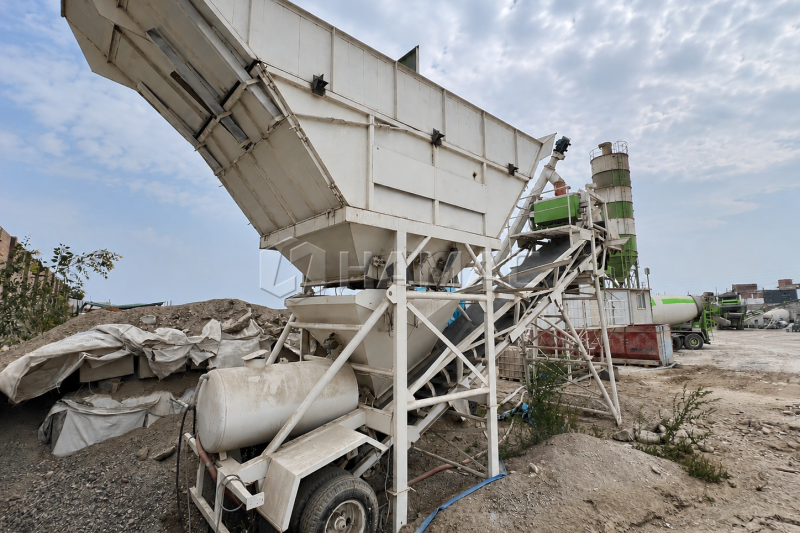
Dry batch concrete batching plant
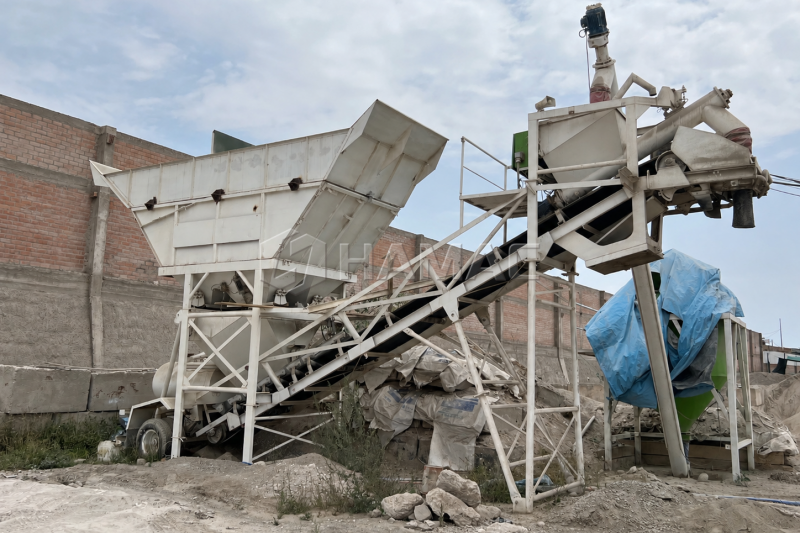
For this project, the material flow was organized around storage, weighing, conveying, and truck loading. Aggregate and sand are handled through the feeding and weighing systems before being transferred by belt conveyor toward the mixer truck. Cement is stored in a cement silo or hopper and weighed before discharge, while the water supply system delivers the required amount of water to the truck. An automatic control system coordinates the batching and discharge process, helping operators manage the plant efficiently.
The absence of a central mixer was an important part of the solution. It simplifies the plant structure and avoids mixer-related maintenance work, while the final mixing is completed inside the transit mixer. HAMAC also notes that the dry configuration can require less total power than a comparable plant with a central mixer and can be moved between sites when project requirements change.
Why did the customer choose a dry batch concrete batching plant?
The customer wanted a straightforward batching solution without a central mixer. The weighed aggregates, sand, cement, and water can be discharged directly into the transit mixer, where the final mixing takes place.
How does the dry batching process work?
The materials are stored and weighed separately, then transferred and discharged into the mixer truck. The truck completes the mixing process while traveling to the construction site.
What are the main advantages of this configuration?
The dry batch design has a simple structure, no central mixer, lower mixer-related maintenance requirements, and a flexible arrangement. It can also be relocated when project conditions change.
Can the plant adapt to different site layouts?
Yes. An aggregate pre-feeding system can be used as an alternative to conventional loading ramps, which can make aggregate feeding more convenient and reduce site preparation requirements.
The project also allowed the customer to consider a flexible aggregate feeding arrangement. Where appropriate, an aggregate pre-feeding system can be used as an alternative to loading ramps, which can reduce the need for ramp construction and make feeding more convenient. The plant can therefore be arranged according to the available working space and the customer's preferred material-handling process. From the customer's perspective, the solution brought the batching and delivery processes together without adding a separate central mixing stage. The automatic system helps coordinate weighing and discharge, while the mixer truck completes the mixing and continues rotating during transportation. This workflow can help maintain the freshness of the concrete and avoid unnecessary mixing time at the plant.
HAMAC supported the project through solution planning, equipment configuration, technical consultation, installation guidance, and after-sales service. Rather than focusing only on individual machines, the solution was planned around the customer's complete material flow and concrete delivery process. Overall, this case shows how a dry batch concrete batching plant can be a practical choice when the customer needs organized automatic batching but prefers the final mixing to take place in transit mixer trucks. Its simple structure, flexible arrangement, and straightforward material flow make it suitable for concrete supply applications where operational simplicity is a priority.
There is no lowest price, only lower price. You get what you pay for. We hope you are looking for the perfect working performance of the equipment, not the low-priced inferior goods. HAMAC only provide our clients with high quality machines. Wish a cooperation with you in the future.
Tags :
concrete batching plantHAMAC MachineryDry Batch Concrete Batching PlantDry Batch PlantDry Concrete Batching Plant
mobile concrete mixer in butuan city philippines in Addis Ababablock pavers machine supplierportable concrete mixer manufactuconcrete pumping machineconcrete pump sale
concrete batching plant projectDiesel Driven Concrete Pumpconcrete pumpSICOMA Planetary Concrete Mixerplanetary / countercurrent concrete mixer